Best Places to Live Near Springfield, Missouri
Considering a move to the Springfield area? This guide compares the communities people consider most, from Ozark and Nixa to Republic, Rogersville, Battlefield, Willard, and Strafford, so you can match a place to what you actually value.
Welcome to the comparison.
If you are dreaming about a slower pace, more space, and a community that still waves back, the towns around Springfield, Missouri deserve a closer look. This guide walks through the areas people search for most when they think about moving here: Ozark, Nixa, Republic, Rogersville, Battlefield, Willard, and Strafford, plus a few smaller towns worth knowing about.
You will not find a ranked list on this page. Every household weighs different priorities, and the right fit for one family can be the wrong fit for another. Instead, this guide compares the communities side by side on the things that matter most: commute, character, conveniences, housing, acreage, and outdoor life. New to the region? Start with the Explore the Ozarks home page for the big picture, and keep the moving to the Ozarks guide open for the practical side of relocation.
How to Use This Guide
Think of this page as a friendly comparison tool rather than a verdict. The goal is to give you enough honest detail to build your own short list, then go see it in person.
Read the Profiles
Each community below covers commute, feel, conveniences, housing types, acreage options, highway access, and recreation. Note which two or three keep coming back to mind.
Weigh Your Priorities
Use the "Comparing Your Priorities" section to decide what matters most: commute distance, land, conveniences, recreation, or small-town character. Let that ranking drive your short list.
Visit in Person
Windows and photos only tell part of the story. Drive the commute at the time you would actually drive it, grab lunch, and walk a neighborhood. The place that feels right tends to announce itself.
The Big Picture: Springfield-Area Living
Springfield is the anchor of Southwest Missouri: major hospitals, Missouri State University, the regional airport, a wide mix of employers, and a food scene that punches well above its size. Our places to eat guide is a good introduction to just how good that scene is. Everything else in this guide sits in a ring around that center.
Each community in the ring has its own personality, but they share a pattern: most jobs and the biggest shopping live in Springfield, and the surrounding towns are where people put down roots. The daily rhythm is a straightforward commute of roughly fifteen to twenty-five minutes for most of them, with a few rural corners stretching toward a half hour.
The region also fits together geographically in a way that makes life easy. Interstate 44 runs east and west, US 65 runs north and south straight down toward the lakes, and US 60, the James River Freeway, ties the western and eastern towns into the city. You can live in a quiet small town and still be at a Table Rock Lake boat ramp or a downtown Springfield ballgame inside an hour most days.
The Region at a Glance
The anchor. Springfield holds the jobs, hospitals, university, airport, and the region's biggest shopping and dining.
The commute. Ring towns sit roughly fifteen to twenty-five minutes out, with rural corners closer to thirty.
The highways. I-44 east and west, US 65 north and south, US 60 and the James River Freeway across the middle.
The outdoors. The lakes, rivers, and state parks sit to the south and are a normal day trip from every community here.
Suburban vs. Small-Town vs. Rural
Before comparing towns, it helps to name the lifestyle you are after. The Springfield area offers the full range, from close-in subdivisions to genuine countryside, and honest self-assessment saves a lot of windshield time.
Suburban
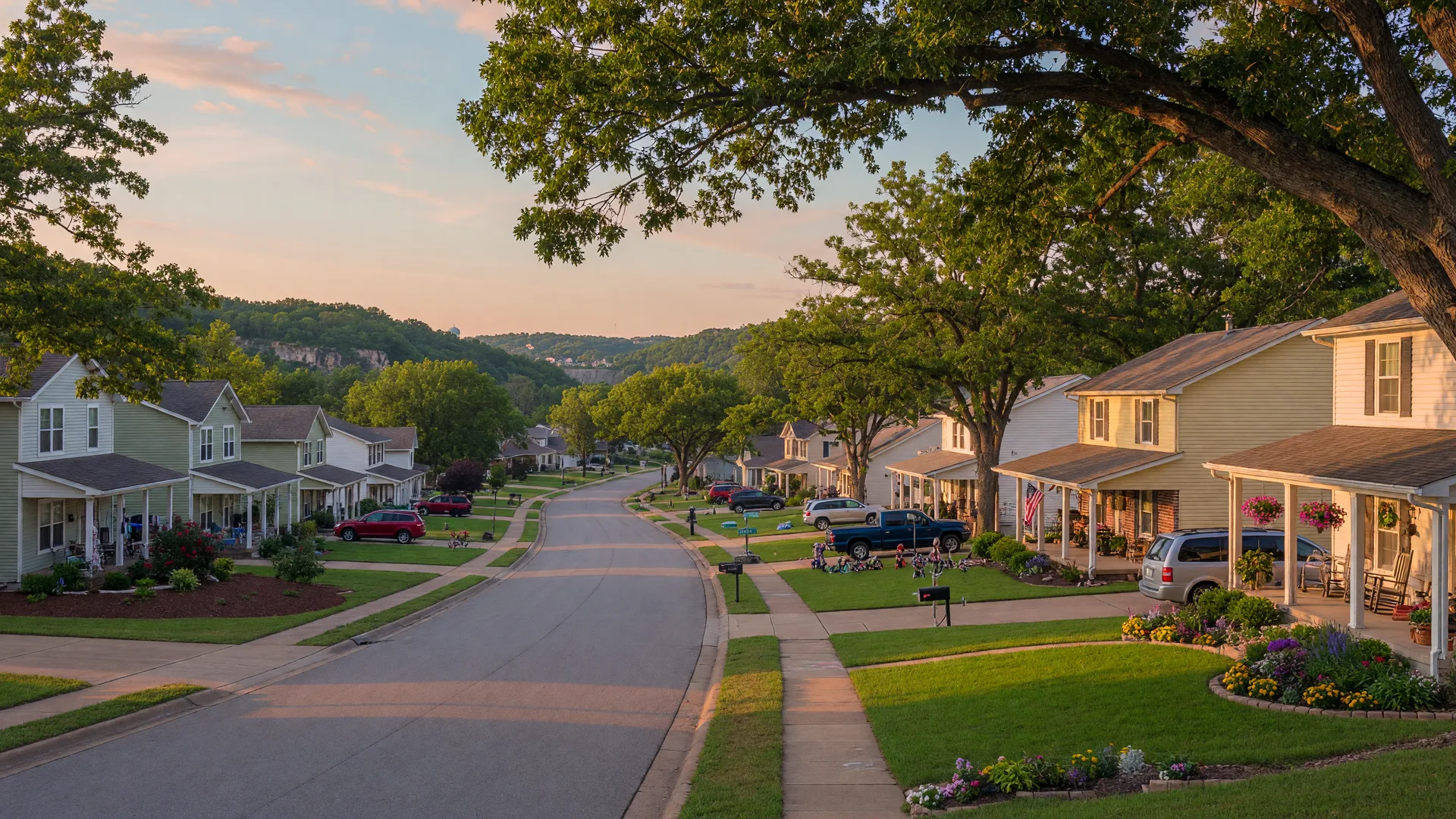
Close-in neighborhoods with city water and sewer, sidewalks, cul-de-sacs, and schools and stores minutes away. You trade elbow room for convenience: everything from groceries to the airport is a short, predictable drive. This is the sweet spot for people who want the least friction in daily life.
Small-Town
A main street, a school community, ballfields, and a festival calendar. Newer subdivisions ring the older core, and acreage often appears right outside the city limits. You drive fifteen to twenty-five minutes into Springfield for the bigger errands, and you know your neighbors in the meantime.
Rural
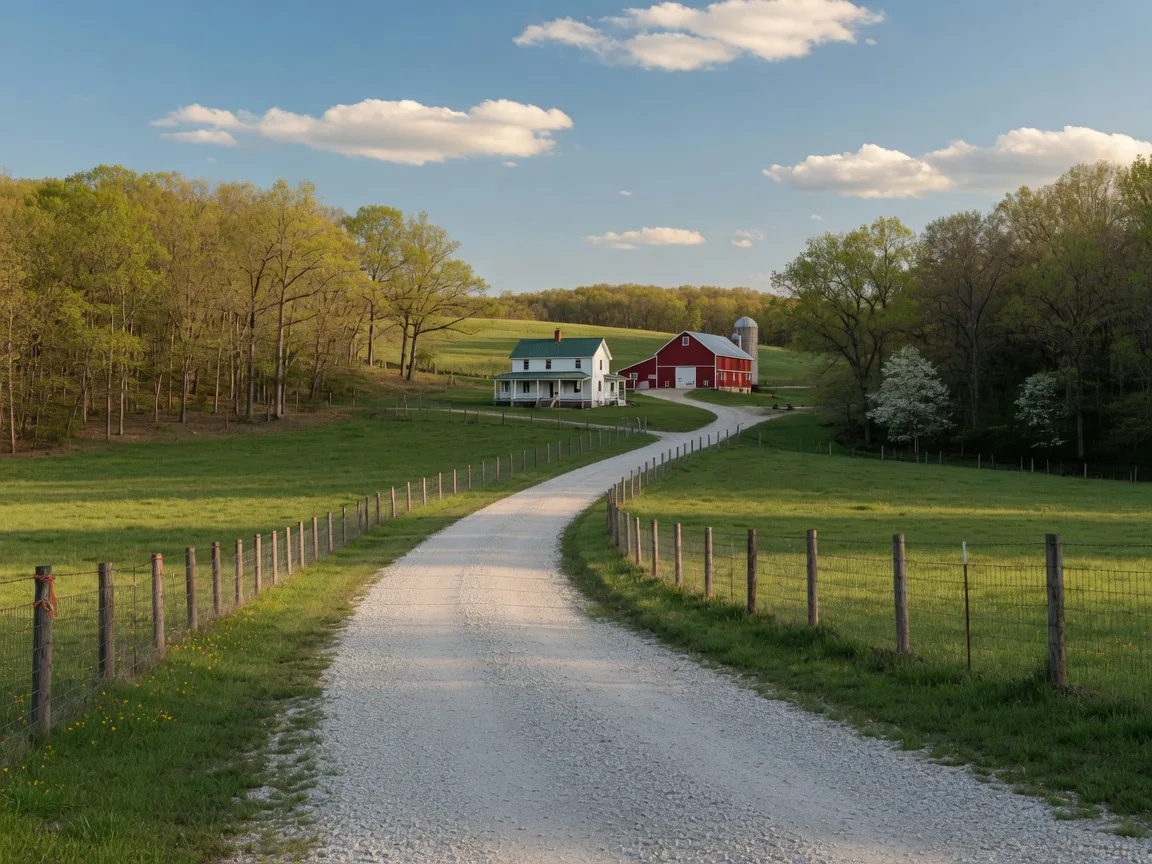
Acreage, timber, pasture, and quiet that is genuinely quiet. Most rural homes run on wells and septic, the grocery run is planned rather than spontaneous, and a trip into Springfield is closer to thirty minutes. In return you get space, privacy, and room for the projects and animals you keep coming back to.
None of these is better than the others. They are different trades. Most people already know which bucket they belong in, and the community profiles below are organized around that choice.
Communities Near Springfield
These seven communities make up the most-searched ring around Springfield. Each profile covers the same ground, so they are easy to compare: commute and access, feel, conveniences, housing, acreage, highway access, and recreation, with the honest tradeoffs at the end.
Ozark
Ozark is the Christian County seat, sitting on the Finley River just south of Springfield on the US 65 corridor. It balances a genuine old-town square with a growing retail and restaurant strip, and newer neighborhoods keep extending outward.
The tradeoff: the corridor is busier than it used to be, and the town is changing fast as new rooftops arrive. Dive deeper with our Living in Ozark guide.
Nixa
Nixa sits just southwest of Springfield in Christian County, a short hop off the US 65 corridor via Route 14. It is one of the region's fastest-growing towns, and the energy shows in new neighborhoods, new shops, and a lively community life around its parks and ballfields.
The tradeoff: the landscape keeps changing as new subdivisions arrive, and the connector carries real traffic at rush hour.
Republic
Republic sits west of Springfield along the historic Route 66 corridor, with US 60 and the James River Freeway carrying commuters into the city in about twenty minutes. It keeps small-town roots, including a friendly downtown, while new neighborhoods and retail spread along the highway.
The tradeoff: it is a commute town, so jobs, bigger shopping, and the airport mean a drive into Springfield or beyond.
Battlefield
Battlefield sits on Springfield's southwest edge just off US 60, the closest-in option on this list. It feels less like its own town and more like a quiet neighborhood community, which is exactly what many buyers want: minutes to the freeway, a short drive to almost anything in Springfield, and a calm street at night.
The tradeoff: the identity leans on Springfield, so most shopping and nightlife mean leaving town to find it.
Rogersville
Rogersville sits east of Springfield on US 60, a classic small town surrounded by rolling hills and farmland, about twenty to twenty-five minutes from the city. Route 125 crosses US 60 here, which makes a lot of trips simple. Schools, ballfields, and a few local businesses anchor daily life.
The tradeoff: conveniences are a car trip away, and the commute stretches depending on which side of Springfield you work.
Willard
Willard anchors the northwest corner of the ring, laid out along I-44 with US 160, recently widened into an expressway corridor, connecting it to Springfield's northwest side. It has the feel of a growing small town with its own schools, local ballfields, and parks, plus newer subdivisions filling in around the edges.
The tradeoff: it is a smaller town than the southern suburbs, so the biggest retail and dining variety means more driving.
Strafford
Strafford sits northeast of Springfield on I-44, with Route 125 crossing the interstate and Route 744, the Kearney Street corridor, linking it to Springfield's northeast side. It is the most rural-feeling of the seven, a genuine small town where old Route 66 still runs through the middle.
The tradeoff: fewer restaurants and stores nearby, balanced by the peace and space that draw people here in the first place.
Smaller Towns & Rural Options
Beyond the seven primary communities, a ring of smaller towns and rural corners gives buyers more choices. None of them carries the full retail menu of the bigger suburbs, but each has its own character and a loyal following for good reasons.
Clever
A small Christian County town southwest of Republic, quiet and friendly, roughly thirty minutes to Springfield. It suits people who want a real small town without the interstate hum.
Highlandville
South of Nixa on Route 125, a rural crossroads community with acreage living and an easy reach up to both the Springfield and Branson corridors.
Sparta
South of Ozark on Route 125, a small town with a country feel and a straight shot up to the US 65 corridor. Popular with buyers who want land without leaving the region's activity behind.
Marshfield
The Webster County seat east of Springfield on I-44. It is a larger small town with a fuller set of local services of its own and a strong Route 66 streak, about half an hour to the city.
Fair Grove
North of Springfield on Route 125, a low-key small town with a friendly pace and countryside all around. It fits people commuting from the north side of town who still want the quiet at the end of the day.
Comparing Your Priorities
Every community in this guide is a good place to live. The question is which one matches your life. Here is how to think about the main tradeoffs.
If commute matters most: the closest-in options are Battlefield and the southern ring, Ozark and Nixa, with Willard, Strafford, and Rogersville running a bit longer depending on where you work. Try the drive at 8 a.m., not on a Sunday afternoon.
If acreage matters most: land is easiest to find at the edges: Rogersville, Strafford, the outskirts of Willard and Republic, and the smaller towns like Sparta, Highlandville, and Clever. Plan for wells and septic out in the country.
If conveniences matter most: the closer-in towns, Nixa, Ozark, Battlefield, and Republic, put groceries, clinics, and services a few minutes away. Rogersville and Strafford are comfortable with a planned errand list.
If recreation matters most: the James and Finley rivers put Ozark, Rogersville, and the southern towns closest to floats and fishing, and everyone is within a reasonable drive of Table Rock, Taneycomo, and Bull Shoals for lake days.
If small-town character matters most: Rogersville, Strafford, Marshfield, and the smaller towns wear their personality openly. Ozark and Republic balance a real old core with newer growth.
If growth matters to you: Nixa and Ozark lead the region in new rooftops, which means more services arriving but also more change. Willard and Republic are close behind. If you prefer things mostly settled, the smaller towns are steadier.
Write down your top three priorities, then go back through the profiles. The two or three towns that keep coming up are your short list, and that short list is your next weekend drive.
Commute & Highway Access
Southwest Missouri runs on a small handful of highways, and once you know the pattern, the region stops feeling far apart. Every town in this guide hangs off one of these corridors.
The Main Corridors
US 65 is the north-south spine, heading south through Ozark and on to Branson and the lakes. I-44 crosses east and west with exits at Willard, Strafford, and Marshfield. US 60 and the James River Freeway serve Republic and Battlefield to the west and run east through Rogersville. Route 125 stitches the region north to south, from Fair Grove through Strafford and down past Highlandville and Sparta. US 160 and Route 744 round out the northwest and northeast connections to Willard and Strafford.
The Realistic Commute
Plan on fifteen to twenty-five minutes from most ring towns to central Springfield, with the rural corners stretching toward thirty. The busiest moments are weekday peaks on US 65 and the James River Freeway, and the summer crush on the Branson strip is the only time the region genuinely slows down. Outside those windows, the drives are easy and mostly scenic, which is why residents happily make them.
One honest tip: your commute is about the address, not the town. Two homes two miles apart can sit on very different routes, so run the drive from the specific house you like before you commit.
Parks, Outdoor Recreation & Lakes
For most people who move here, the outdoors is not a bonus, it is the reason. Every community in this guide has parks and green space close by, and three big lakes anchor the region to the south. The things to do page has trails, caves, and family-day ideas; here is how the water stacks up.
Table Rock Lake
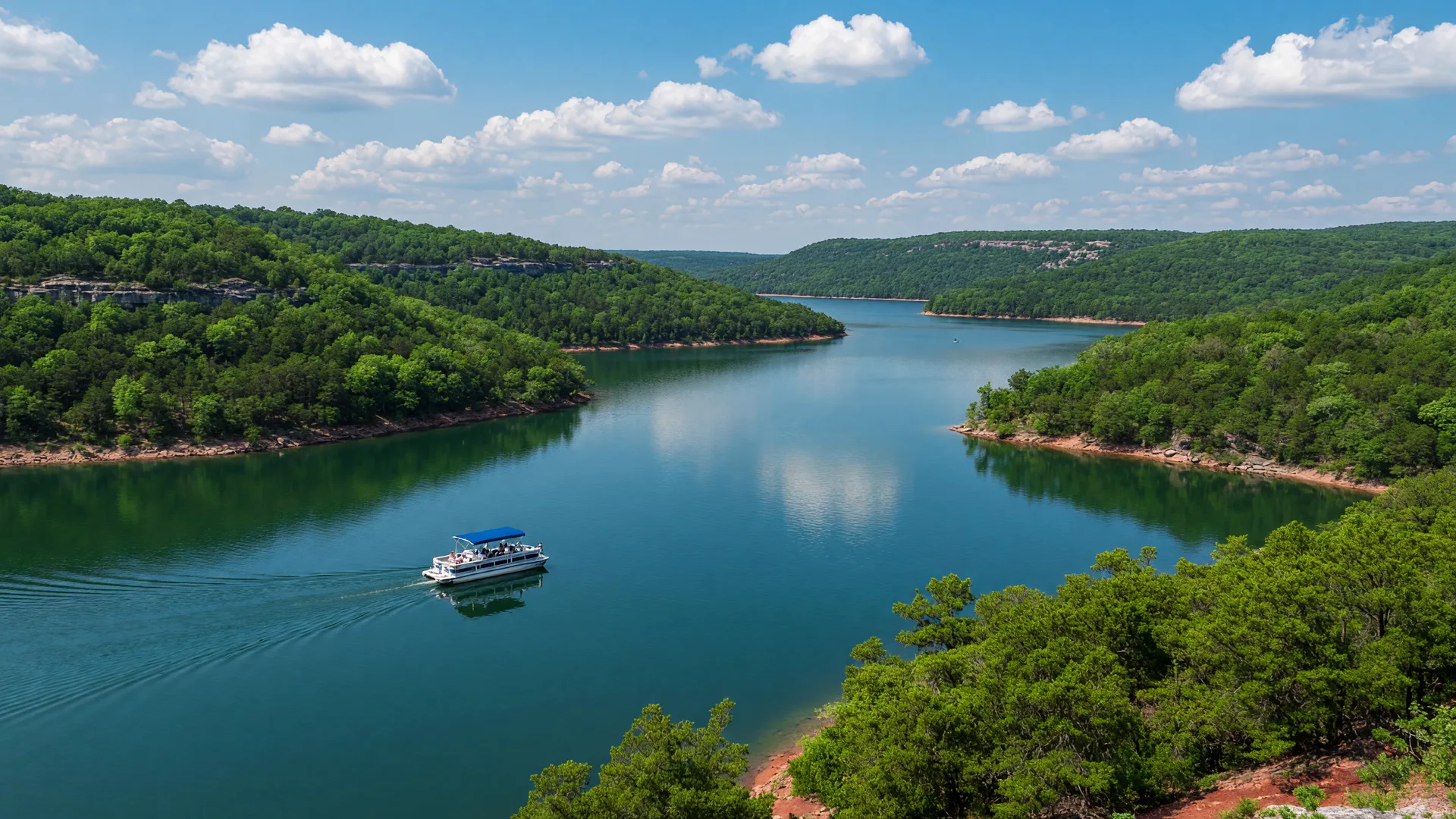
The crown jewel, roughly forty-five minutes south on US 65: deep, clean water ringed by bluffs and timber, perfect for boating, bass fishing, swimming coves, and lakeside dining.
Lake Taneycomo
Born from Table Rock Dam and running through Branson, Taneycomo is a cool, trout-stocked river-lake where fly fishing, drift boats, and riverside restaurants rule.
Bull Shoals
A big, quiet reservoir below the White River country with less developed shores and trophy fishing. If you want lake life with fewer crowds, this is it.
Closer to home: Springfield's Nathanael Greene and Close Memorial Parks, Wilson's Creek National Battlefield near Republic and Battlefield, the Finley and James rivers for floats, and state forests and conservation areas scattered across the southern counties. There is always a trail, a ballfield, or a fishing hole within minutes.
Where to Start Looking
Comparing towns on a screen is homework. Falling for one is a road trip. Here is a simple way to turn this guide into a real plan.
Build a short list from this guide. Pick the two or three communities that fit your top priorities. Do not overthink it; the list will sharpen itself on the road.
Spend a weekend driving the ring. Visit each short-list town, drive the commute at the time you would actually drive it, and walk a neighborhood or two. The place usually announces itself.
Eat where you might live. Breakfast counts. Our places to eat guide points you to the spots locals actually go, and town character shows up fast at a diner counter.
Visit during an event. Festivals and local events show a town at its liveliest, and they are the fastest way to feel the community pulse.
Read the full moving guide. The moving to the Missouri Ozarks guide covers wells, septic, acreage, utilities, taxes, and the practical first steps once you settle on a town.
Talk to a local who drives these roads daily. Dan Cornell travels all of these communities as a Southwest Missouri Realtor, and he is happy to compare notes. Meet Dan on the about page, or use the button below.
Not Sure Which Ozarks Community Fits What You're Looking For?
Tell Dan what matters most to you: commute, acreage, lake access, shopping, small-town living, or something else. He will help you narrow down the areas worth exploring, with no pressure and no sales pitch.
Ask Dan About Moving to the Ozarks